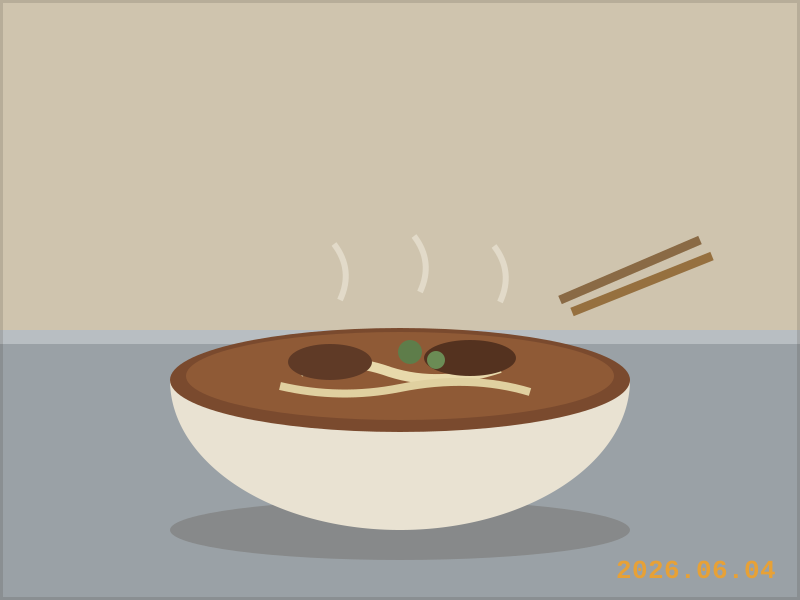
The shop has no name that I could find. It has a steel table, six stools, a pot that has clearly been in operation since before I was born, and an auntie who takes your order by looking at you slightly impatiently until you speak.
The soup: beef shank, a broth that is dark without being heavy, noodles with actual opinion to them, and a spoonful of pickled greens that resets your palate every third bite. I ate it in nine minutes and thought about it for three weeks.
So I tried to make it. This is documented properly in REC-001, but the short version of the campaign:
Attempt one was beef-flavored water with a rumor of star anise. I had rushed the browning and drowned everything in too much liquid. Educational, barely edible.
Attempt two overcorrected. So much doubanjiang that the broth tasted angry. My kitchen smelled incredible and the soup was a wall of salt. I ate it anyway, out of respect for the beef.
Attempt three worked, and the fix was embarrassing: patience, in two places. Brown the shank properly — past the point that feels right, into the point that feels slightly wrong — and then let the finished pot rest overnight. The overnight rest is not optional. Whatever happens in the fridge at 3 am is the actual recipe.
The auntie's real ingredient is thirty years of the same pot. I substituted a night in the refrigerator, which is the closest a home cook gets to time travel.
What I cannot replicate: eating it on a stool, elbow to elbow with strangers, with the pot two meters away. Some percentage of every great meal is the room. My kitchen version tops out at maybe eighty-five percent of the original, and I have decided to be at peace with that, because the remaining fifteen percent is a plane ticket.